

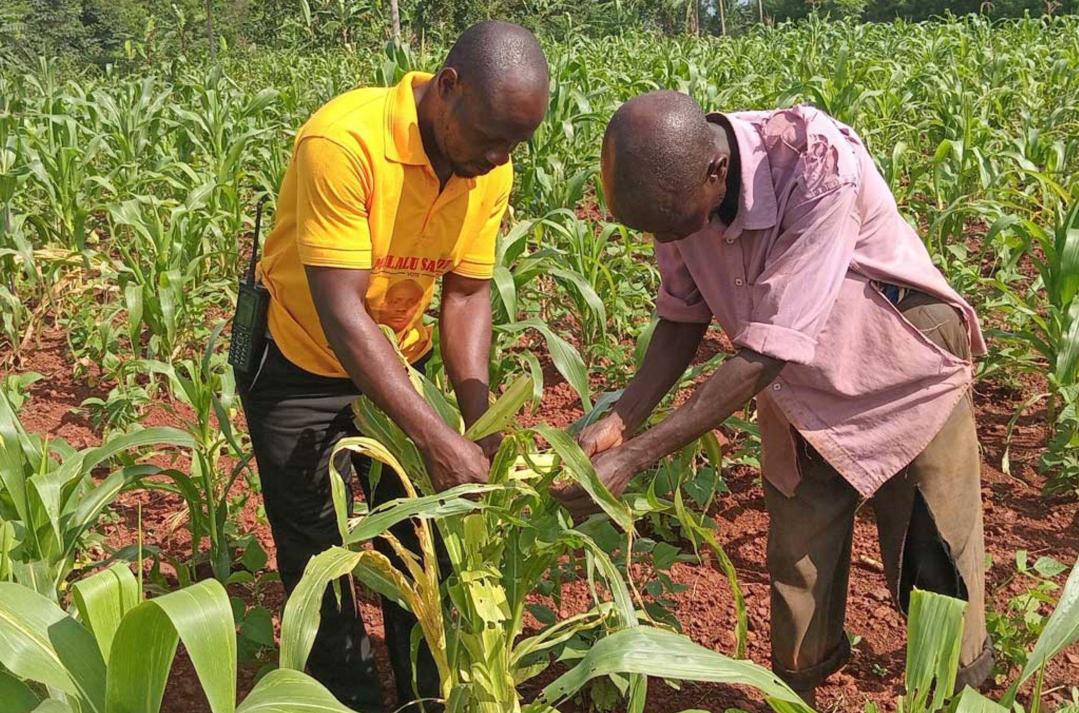
Farmers in Bukomansimbi District are raising concern over the increasing sale of fake seeds and pesticides on the market, saying the problem has caused heavy losses, poor harvests and growing frustration among agricultural communities.
Several farmers interviewed across the district say they spend large sums of money buying seeds and agrochemicals hoping to improve production, only to end up harvesting little or nothing after planting fake or ineffective products.
Moses Kibuuka, a maize farmer from Kibinge Sub-county, said he lost nearly an entire season after purchasing seeds from a local agro-input dealer which failed to germinate properly.
“I prepared my garden, bought seeds and planted expecting a good harvest, but only a few seeds germinated. I lost money, time and labour,” Kibuuka said.
He explained that many farmers borrow money to invest in agriculture and are left in debt after such losses.
“When the season fails because of fake seeds, you remain with loans and no food at home,” he added.
Fake pesticides worsening losses
Farmers also accuse some agrochemical dealers of selling fake pesticides which fail to control pests and diseases.
Hussein Lwebuga, a coffee farmer from Lukuuku village in Butenga Sub-county, said repeated spraying of pesticides did not stop pest infestations on his plantation.
“The seller assured me the medicine was genuine, but after spraying, nothing changed. My coffee leaves continued drying and the pests increased,” he said.
Residents say many farmers cannot easily distinguish between genuine and counterfeit agricultural products, worsening losses and deepening rural poverty.
“When crops fail, children miss school because parents cannot raise fees. Some families even lack food,” said resident Ahmed Sserunjogi.
Agricultural extension workers acknowledge the challenge, warning farmers against buying inputs from unlicensed dealers.
“Some traders bring substandard products because farmers cannot easily identify fake inputs. We encourage farmers to buy from trusted and certified dealers,” an extension worker said.
They noted that counterfeit seeds and pesticides not only reduce yields but also discourage farmers from investing in agriculture altogether.
Local leaders are now calling for increased inspections and tougher penalties against dealers involved in selling fake agricultural inputs.
Farmers also want intensified sensitisation programmes to help communities identify genuine products and adopt better farming practices.
The problem comes at a time when farmers are already battling unpredictable weather patterns, prolonged droughts and rising production costs linked to climate change.
Despite the challenges, farmers say they remain hopeful that stronger regulation and government intervention can restore confidence in the agricultural sector.
“We only ask government to protect farmers because agriculture is our survival,” Kibuuka said.
